
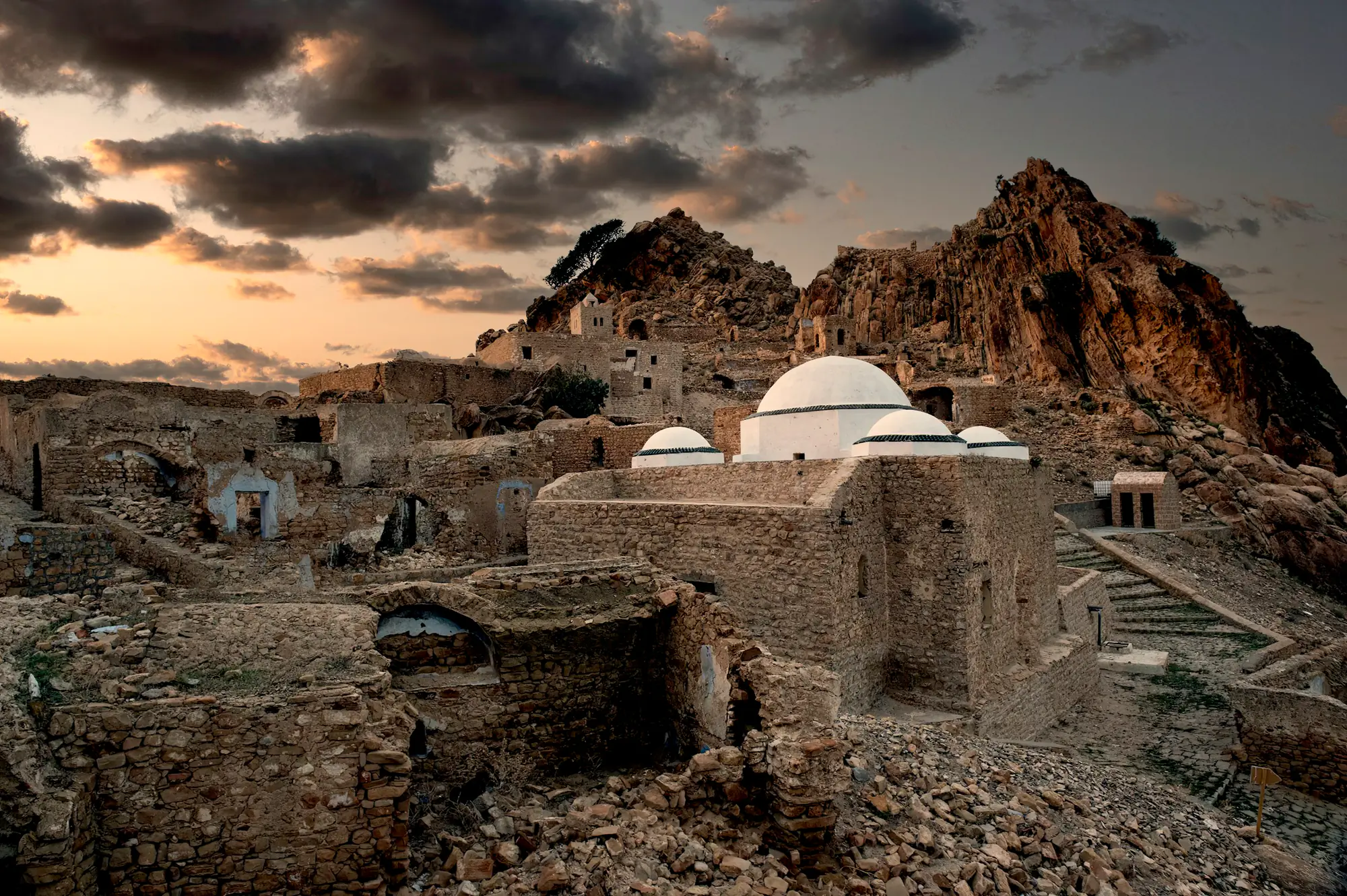
Since 25 July 2026 the village is a UNESCO World Heritage site in its own right, so expect more visitors and a few more rules. This guide sticks to the things to do in Sidi Bou Said that are worth your time, what it costs in dinars, and how to time it so you see the blue doors rather than the backs of tour groups.
Is Sidi Bou Said a UNESCO World Heritage Site?
Yes. The World Heritage Committee inscribed the Village of Sidi Bou Saïd on 25 July 2026, at its 48th session in Busan, South Korea, by decision 48 COM 8B.15. Tunisia filed it as “a hub of cultural and spiritual inspiration in the Mediterranean”, and it was listed under criterion (iii).
It is Tunisia’s tenth World Heritage property. The village used to sit in the shadow of the Archaeological Site of Carthage, listed in 1979 and just down the road. Now the blue-and-white hilltop has its own entry, covering about 76.5 hectares plus a buffer zone.
For you, the change is mostly about crowds and care. The village was already protected by Tunisian law, so nothing looks different, but expect more coach groups in high season.
What are the best things to do in Sidi Bou Said?
The essentials fit in one slow morning: two cafés, two historic houses, one viewpoint and the walk to the sea.
| Sight | Time needed | Cost | Best moment |
|---|---|---|---|
| Café des Délices | 30–45 min | price of a drink | Before 10:00 or at sunset |
| Café des Nattes | 20–30 min | price of a drink | Early morning, before the groups |
| Ennejma Ezzahra palace | 45–60 min | 10 TND (5 reduced, under 12s free) | Opening time, 09:00 |
| Dar el Annabi | 30–45 min | about 10 TND, mint tea included | Mid-morning |
| Seaside cemetery and viewpoint | 20–30 min | free | Late afternoon |
| Marina and small beach | 45 min to 2 h | free | Lunch or a swim in summer |
| Main street, galleries and shops | 30–60 min | free to browse | Any time, quietest early |
Café des Délices: the classic sea view
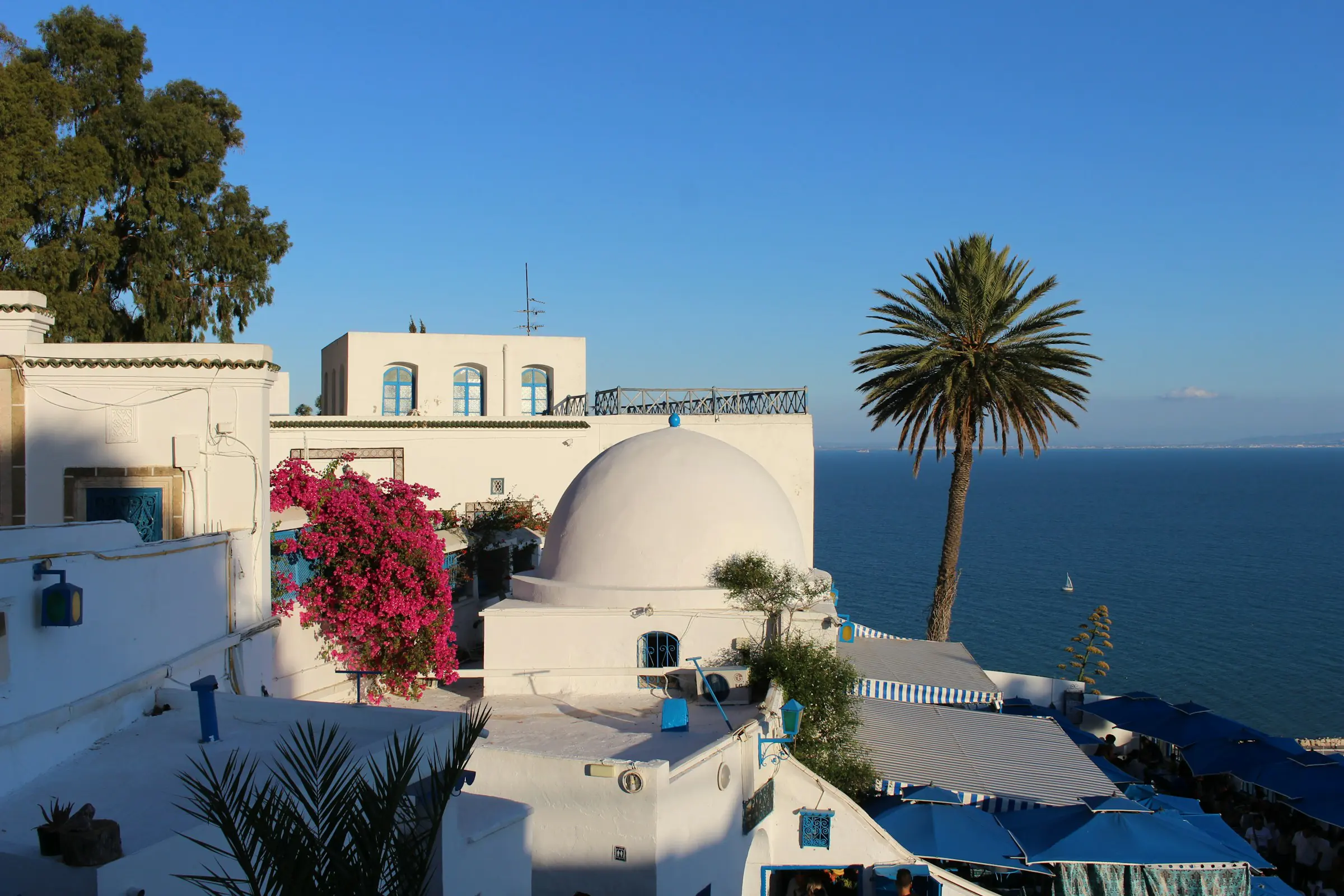
Café des Délices hangs off the cliff on terraces facing the Gulf of Tunis, and the view is the reason you came. Order a mint tea with pine nuts and pick the lowest terrace you can find. Patrick Bruel named a song after it in 1999.
Café des Nattes: tea on the steps
Café des Nattes sits at the top of the main steps, in the building that once served as the entrance to the mosque. You sit on mats and low benches, as the name suggests. Paul Klee painted the little square around it in April 1914, and it has barely changed.
Ennejma Ezzahra: Baron d’Erlanger’s palace
Ennejma Ezzahra is the house Baron Rodolphe d’Erlanger built between 1912 and 1922, with carved plaster, painted ceilings and gardens above the sea. Since 1991 it has housed the Centre for Arab and Mediterranean Music, with a permanent display of old instruments.
- Open Tuesday to Sunday, closed Mondays and public holidays.
- September to June: 09:00–13:00 and 14:00–17:00, last tickets 16:30.
- July, August and Ramadan: 09:00–15:30, last tickets 15:00.
- Tickets: 10 dinars, 5 reduced, free for accompanied children under 12. Photos inside need permission.
- In summer, evening concerts move to the open-air esplanade.
Dar el Annabi: a lived-in old house
Dar el Annabi is an 18th-century family house on the main street, later the summer home of the mufti’s family and now a small private museum. You walk through the library, prayer room and patios, then climb to the roof. Entry is about 10 dinars and usually includes a mint tea.
The seaside cemetery and the lighthouse hill
For the widest view, walk up toward the lighthouse at the top of the village and on to the whitewashed cemetery that runs down the slope to the sea. The hill was once called Jebel el-Manar, the hill of the lighthouse, because it served as a lookout long before the village existed. It is free and best in late afternoon light.
The marina and the beach below
From the village, a steep road and stairway lead down to the marina, with a few fish restaurants and a small beach nearby. Fine for a dip and lunch; remember the climb back up.
Bambalouni on the main street
Bambalouni is a ring of fried dough rolled in sugar, sold hot from small stalls on rue Hédi Zarrouk for around 1 dinar. Eat it hot, on the spot.
Why is Sidi Bou Said blue and white?
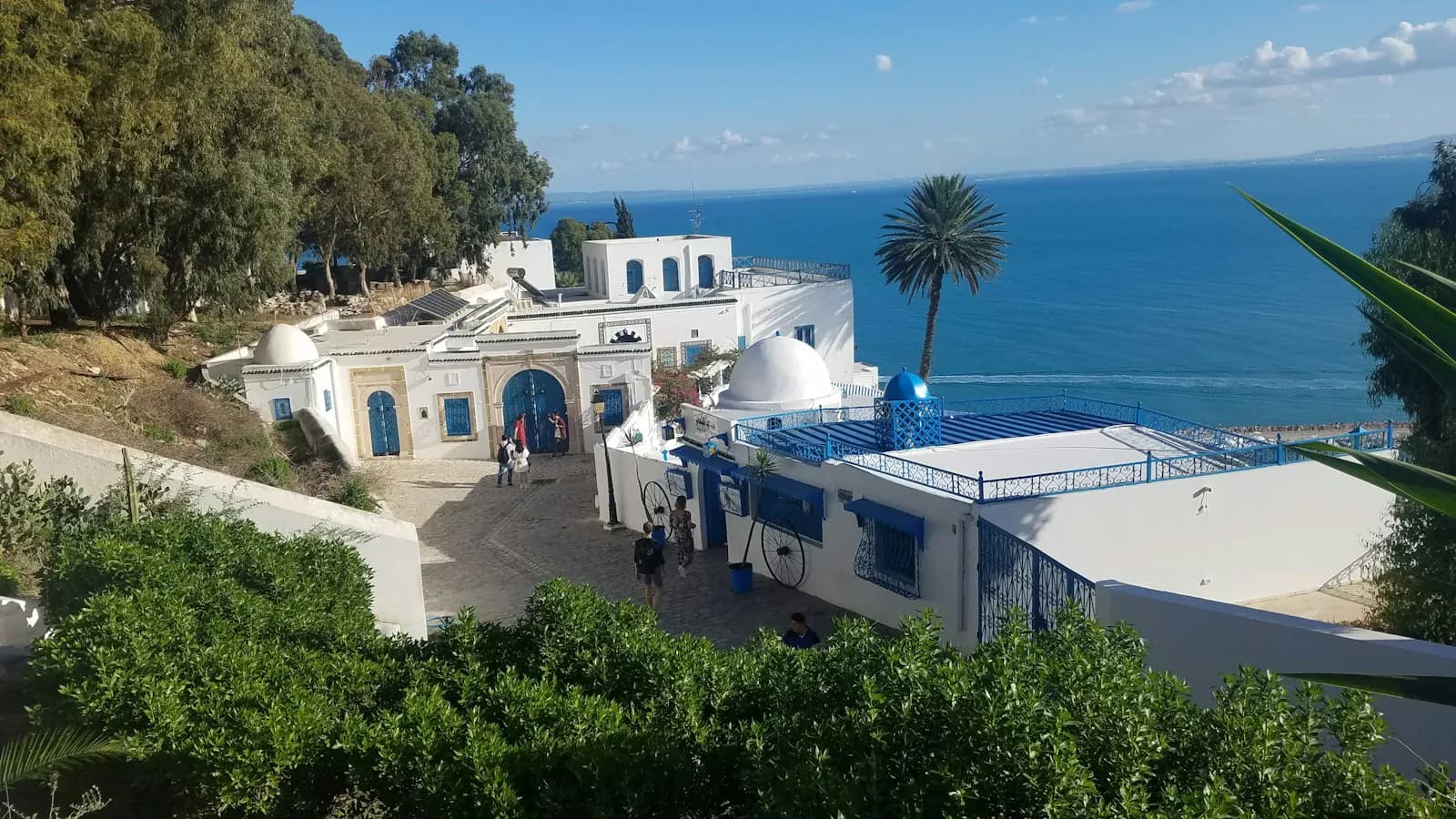
Because a law made it so. After lobbying by Baron d’Erlanger, a decree published on 28 August 1915 protected the look of the promontory and controlled building there, and the white walls with blue doors and shutters spread from then on. It was one of the earliest landscape protection laws anywhere.
The village itself is far older. It takes its name from Abu Said al-Baji, a Sufi teacher born in 1156 who retired to the hill to teach and was buried there in 1231. His shrine still stands near the top of the steps, and it is a place of prayer, not a monument, so dress modestly and keep your voice down.
Artists followed the colour. Paul Klee, August Macke and Louis Moilliet spent about two weeks in Tunisia in April 1914, sketching in Sidi Bou Said, Hammamet and Kairouan, a trip that changed Klee’s painting. Later came André Gide, Michel Foucault and the painters of the École de Tunis, which is why galleries still line the lanes.
How do you get to Sidi Bou Said from Tunis, Hammamet or Sousse?
From Tunis, take the TGM light rail from Tunis Marine: it costs around 1 dinar and takes about 35 minutes. From Hammamet it is about 78 km and 1 h 10 by car; from Sousse or Port El Kantaoui about 150 km and 2 hours.
The TGM light rail from Tunis Marine
The TGM runs from Tunis Marine, at the end of Avenue Habib Bourguiba, via La Goulette and Carthage to La Marsa. Get off at Sidi Bou Said station and walk up the hill for about 10 minutes. Tickets cost about a dinar, even in first class. The section to La Marsa was closed for works from September 2025 and full service only resumed on 20 February 2026, so check locally if you read older reviews about delays.
By taxi or car
A yellow taxi from central Tunis takes 20 to 30 minutes depending on traffic; ask the driver to use the meter. If you drive, the lanes in the old village are not for cars, so you park below the centre or along the approach road and walk up. On busy days spaces fill by mid-morning.
From Hammamet, Sousse and Port El Kantaoui
From the resorts the train is slow, with a change in Tunis and then the TGM. Most people come with a hotel coach excursion or a private driver. A coach seat is usually cheapest for one person. From two or three people up, our private Sidi Bou Said half day excursion, with Carthage, often costs less per head, with your own timetable: from Hammamet the car costs €70 for up to four people, so €18 each for a family of four, and the outing takes about 4 h 45 door to door.
 Sidi Bou Said half dayHalf day, from €70 per carSee this day
How much time do you need in Sidi Bou Said, and when should you go?
Two hours covers the main street, one café and the viewpoint. Allow three to four hours if you want both houses, lunch and the marina. Go before 10:00 or after 16:00.
The midday rush comes from coaches and cruise ships docking at nearby La Goulette: on 12 June 2025 two ships alone landed nearly 9,500 passengers, and many of them were bused straight to Sidi Bou Said.
By season, April to June and September to October are the most comfortable for walking the slopes. In July and August, a couple staying in Hammamet would do best with an early start, back at the pool by lunchtime. Our guide to the best time to visit Tunisia has month-by-month details.
What can you do in Sidi Bou Said in half a day or a full day?
Half a day covers the main things to do in Sidi Bou Said itself. A full day lets you add Carthage and the Tunis medina, which is the classic combination and still the best use of a long drive from the coast.
Sample half-day plan
- 08:30: arrive by TGM or car, walk up the main street while it is still empty.
- 09:00: Ennejma Ezzahra palace and gardens.
- 10:00: Dar el Annabi and its roof terrace, mint tea included.
- 10:45: bambalouni on the street, then tea at Café des Délices.
- 11:30: down to the marina for a late breakfast or early lunch, then leave.
Sample full day with Carthage and the Tunis medina
- 08:00: pickup at your hotel.
- 09:15: the Tunis medina, from Bab Bhar through the souks to the Zitouna Mosque.
- 11:30: Carthage: the Antonine Baths by the sea, then Byrsa Hill and its museum, with a quick stop at the Tophet.
- 13:30: lunch in Carthage or at the Sidi Bou Said marina.
- 15:00: Sidi Bou Said: main street, Café des Délices, a gallery or two.
- 16:30: leave for the coast, back at your hotel by 18:00.
This is exactly the route of our private, full-day Tunis Carthage Sidi Bou Said excursion, with the medina. From Hammamet the car is €80 for one to four people; tickets and lunch are on top. A family of four from Sousse pays €130 for the car, which is €33 each.
What does Carthage cost to visit?
One Carthage ticket covers the scattered sites, including the Antonine Baths, Byrsa Hill and the National Museum of Carthage, the Tophet, the Punic ports and the Roman villas. Under the new national price grid in force since 1 April 2026, foreign visitors pay 20 dinars, rising to 30 in January 2027. A combined Bardo and Carthage ticket costs 45 dinars.
The Antonine Baths are the reason to go: built in 145–162 AD under Antoninus Pius, they were the largest Roman baths in Africa.
 Tunis, Carthage & Sidi Bou SaidFull day, from €70 per carSee this day
What should you buy in Sidi Bou Said, and what is a fair price?
Buy small: painted ceramics, the white and blue wire birdcages, jasmine posies, prints from the galleries. Prices on the main street are higher than in the Tunis medina, so compare before paying.
- Ask the price of two or three items before showing interest in one.
- Fixed-price galleries are the exception; street stalls expect some bargaining, usually ending well below the first figure.
- Pay in dinars. Euros are accepted in some shops, at a poor rate. One euro was about 3.4 dinars in August 2026.
- Jasmine sellers walk the lanes in the evening: a posy costs a coin or two, not a note.
What should you wear, and is Sidi Bou Said easy to walk?
Most things to do in Sidi Bou Said involve slopes, so wear comfortable flat shoes, and clothes that cover your shoulders and knees. The village is a hill of polished cobbles and steps, so think before bringing a pushchair or a wheelchair.
- The main street climbs steadily from the car parks to Café des Nattes. Wheelchair users can manage the lower part with help, but the steps, the cafés and the cemetery are hard going.
- Cobbles get slippery after rain. Sandals with no grip are the most common mistake.
- Bring water and a hat between May and September; shade is patchy.
- Before travelling, read your government’s travel advice and our honest piece on whether Tunisia is safe to visit.
All our Tunisia excursions are private trips by car, not boat trips, so book any gulf cruise locally at the marina. If you want the village without parking and timetables, a driver who waits for you is simplest: ours come from the licensed local agencies we work with. You can book online or on WhatsApp.
Questions people ask
Is Sidi Bou Said worth visiting?
Yes, if you go at the right hour. The view over the Gulf of Tunis, the palace of Ennejma Ezzahra and the cafés are unlike anything in the beach resorts. At midday on a cruise-ship day it can feel like a queue, so arrive before 10:00 or after 16:00 and combine it with Carthage.
How far is Sidi Bou Said from Hammamet?
About 78 km, or roughly 1 hour 10 minutes by car on the motorway, depending on traffic around Tunis. By public transport you need a train or louage to Tunis, then the TGM, which can take over two hours. A half-day private trip from Hammamet takes about 4 h 45 door to door.
Why is Sidi Bou Said blue and white?
Baron Rodolphe d’Erlanger, who settled in the village in 1912, pushed for its protection. A decree published on 28 August 1915 controlled building and appearance on the promontory, and the white walls with blue doors and shutters became the rule. The colour scheme is therefore a deliberate 20th-century choice.
When did Sidi Bou Said become a UNESCO site?
On 25 July 2026, at the 48th session of the World Heritage Committee in Busan, South Korea. The property is called the Village of Sidi Bou Saïd and was listed under criterion (iii). It is Tunisia’s tenth World Heritage site, separate from Carthage, which has been listed since 1979.
Is there a beach in Sidi Bou Said?
There is a small beach next to the marina at the foot of the hill, reached by a steep walk down. It is fine for a quick swim before lunch, but it is small and busy in summer. For a proper beach day, Gammarth and La Marsa a little further north are better choices.
Can you visit Sidi Bou Said in the evening?
Yes, and many locals prefer it. After the coaches leave, the cafés fill with families from Tunis, jasmine sellers walk the lanes and the sunset lights up the bay. The museums close in the afternoon, so see them first. The TGM runs late, but check the last train back.
Sources
- UNESCO World Heritage Centre: Decision 48 COM 8B.15, Village of Sidi Bou Saïd
- Business News: Officiel, Sidi Bou Saïd inscrit au patrimoine mondial de l’UNESCO (25 July 2026)
- Afrik.com: Sidi Bou Saïd à l’UNESCO, le village bleu et blanc sort de l’ombre de Carthage
- Africanews: Tunisian town of Sidi Bou Said added to UNESCO World Heritage list
- UNESCO World Heritage Centre: Archaeological Site of Carthage
- CMAM: Tarifs et horaire, Palais Ennejma Ezzahra
- CMAM: Historical landmarks
- Wikipedia: Ennejma Ezzahra
- Wikipédia: Sidi Bou Saïd
- Webdo: Comment est né le bleu de Sidi Bou Saïd
- AramcoWorld: Travels in Tunisia (Klee, Macke and Moilliet, 1914)
- Wikipedia: Louis Moilliet
- Mademoiselle Bon Plan: Sidi Bou Saïd guide (Dar el Annabi, bambalouni)
- Seat61: Train travel in Tunisia (TGM)
- Kapitalis: TGM, reprise totale du trafic (19 February 2026)
- Webdo: Musées et sites archéologiques, nouvelle grille tarifaire dès le 1er avril
- Business News: Musées et sites archéologiques, nouveaux tarifs (1 April 2026)
- Wikipedia: Baths of Antoninus
- Webdo: Près de 9 500 croisiéristes ont débarqué à La Goulette
- Le Routard: Cimetière de Sidi Bou Saïd
- La Presse: Dinar tunisien, combien vaut-il face à l’euro (12 August 2026)