
We read every official page again on 9 October 2026, so the wording below is what each government says today, with its date. Where we could not confirm something, we left it out.
Is Tunisia safe to visit according to official travel advice?
Yes: none of the five governments warns against the country as a whole, and all of them treat the tourist coast as open for normal travel with extra care. All five also say terrorism remains a risk, and Tunisia has been under a state of emergency since November 2015, currently extended to 31 December 2026.
| Government | Overall level | Advised against | Tourist coast | Page date |
|---|---|---|---|---|
| UK, FCDO | No country-wide warning; "terrorists are likely to try to carry out attacks" | All travel: Chaambi Mountains, Mounts Salloum, Sammamma and Mghila, militarised zone south of El Borma and Dhehiba, 20 km strip of the Libyan border, Ben Guerdane. All but essential: Kasserine governorate, parts of Jendouba and El Kef, Mount Orbata, 75 km from the Libyan border (Zarzis excluded) | Not restricted | Updated 24 July 2026, still current 8 October 2026 |
| USA, State Department | Level 2: Exercise increased caution | Do not travel: within 16 km of the Algerian border (except Tabarka and Ain Draham), within 16 km of the Libyan border, Chaambi, Salloum, Sammamma, Mghila, Orbata, desert south of Remada (military zone) | Level 2 applies | Issued 21 May 2026 |
| France, Conseils aux voyageurs | Yellow (vigilance renforcée) for most of the country | Red: far south near Libya and Algeria (military zone since 2013), western mountains. Orange: desert south and east of Bir Rijm Maatoug, Borj Bourguiba and Ben Guerdane, rural Kasserine, Sbeitla, Sidi Bouzid, Gafsa, about 5 km strip of the Algerian border in Jendouba and Le Kef | Yellow | Updated 15 September 2026, map 13 March 2026 |
| Germany, Auswärtiges Amt | No Reisewarnung; raised terrorism risk | South and southeast of a line Tozeur/Nafta, Douz, Ksar Ghilane, Tataouine, Zarzis; Algerian border area and its mountains; unorganised desert tours | Not restricted | Valid unchanged since 6 October 2026 |
| Italy, Viaggiare Sicuri | No country-wide warning | Libyan border crossings, Algerian border areas (El Kef, Kasserine, Kebili, Tataouine), military zones in El Kef, Kasserine and Sidi Bouzid, two Tunis suburbs (Ettadhamen, El Intilaka) | Protests "rarely" reach tourist sites | Updated 29 September 2026 |
Read the table with one idea in mind: the restricted zones are hundreds of kilometres from the beach hotels. Hammamet is about 200 km in a straight line from the nearest Algerian border area, and much further from Libya. You can check each page yourself: FCDO, State Department, France Diplomatie, Auswärtiges Amt and Viaggiare Sicuri.
Which areas of Tunisia should you avoid?
- The Algerian border, especially the mountains of Kasserine governorate (Chaambi, Salloum, Sammamma, Mghila) and Mount Orbata near Gafsa, where security forces still operate.
- The Libyan border, including Ben Guerdane, because of cross-border terrorism and the fighting in Libya.
- The militarised desert in the far south (south of Remada, El Borma and Dhehiba), which needs a permit anyway.
- Unorganised desert trips: Germany specifically advises against them south of the Tozeur, Douz, Tataouine line.
Is the tourist coast safe: Hammamet, Sousse, Monastir, Tunis and Djerba?
Yes. All five governments leave these places open. France puts them in the yellow zone, the same level as most of the country, and Germany notes that police posts are deployed at beaches and tourist spots in summer. Djerba sits north of the British 75 km Libyan border band, which explicitly excludes Zarzis and the rest of Medenine governorate north of the C118 road.
Does the war with Iran affect Tunisia?
Not directly. The war that began on 28 February 2026, when the US and Israel struck Iran, has been fought in the Middle East and the Gulf, with ceasefires that have only partly held. Iranian strikes have hit Israel and Gulf and Iraqi territory. Nothing has reached North Africa.
Tunis is about 2,300 km from Tel Aviv and 3,700 km from Tehran. None of the five government pages for Tunisia mentions Iran. What the British and American pages do mention is protests near Western embassies in Tunis linked to the Israel and Gaza conflict since October 2023: peaceful so far, but worth walking away from.
The effect you may notice is on prices, not safety: dearer jet fuel has pushed up some airfares. So if you are asking whether the Iran war changes the answer, the official advice today is clear: none of the advice treats Tunisia as a conflict zone.
What happened in 2015, and what has changed since?
Two attacks on tourists in 2015 shaped Tunisia’s reputation, and security around hotels and sites has been much heavier ever since. On 18 March 2015, gunmen killed 21 foreign visitors and a police officer at the Bardo Museum in Tunis. On 26 June 2015, a gunman killed 38 people, 30 of them British, on the beach of a hotel in Port El Kantaoui, north of Sousse.
After Sousse, the government sent armed tourist police to beaches and hotels, and a state of emergency followed in November 2015. The UK kept advising against all but essential travel until 26 July 2017, when it reopened most of the country, Tunis and Sousse included.
The threat has not gone. The FCDO lists later incidents, mostly aimed at security forces, and a shooting at the Ghriba synagogue on Djerba in May 2023 that killed five people. That is why you see metal detectors at hotel entrances and police at museums: they are part of the normal landscape now.
What scams and petty crime should tourists watch for?
Theft and small cons are the risks you are most likely to meet. The FCDO says theft is the most common crime and that tricksters use distraction to steal, and Italy reports pickpocketing rising in run-down districts, especially at night. Most problems are about money, not danger.
- Taxi meters. Yellow city taxis have a meter. If the driver says it is broken, agree the fare before you get in or wait for the next car.
- "The medina is closed today." A friendly stranger explains the souk is shut for prayer or a festival, then walks you to a cousin’s carpet shop. The medina is open; thank him and keep going.
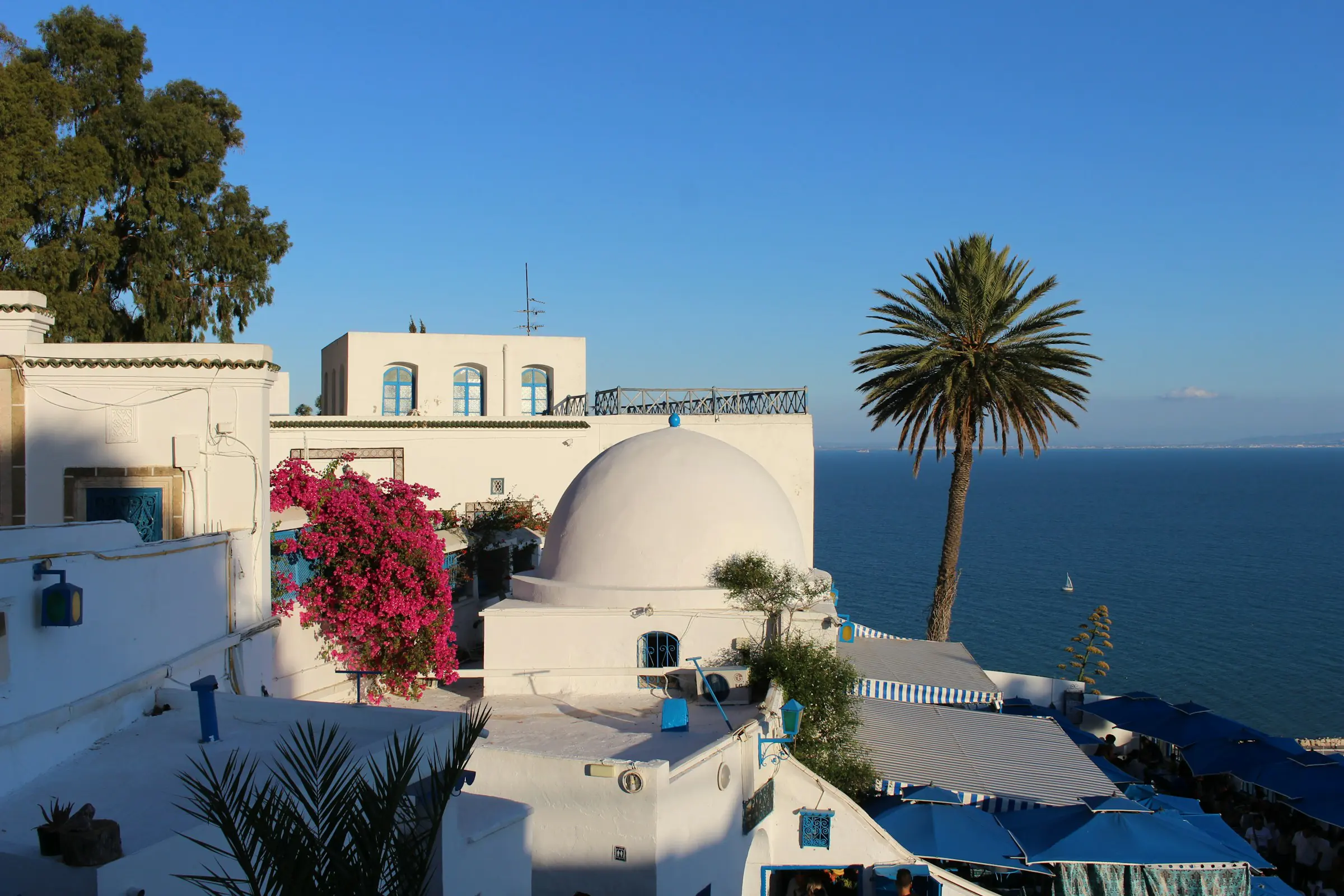
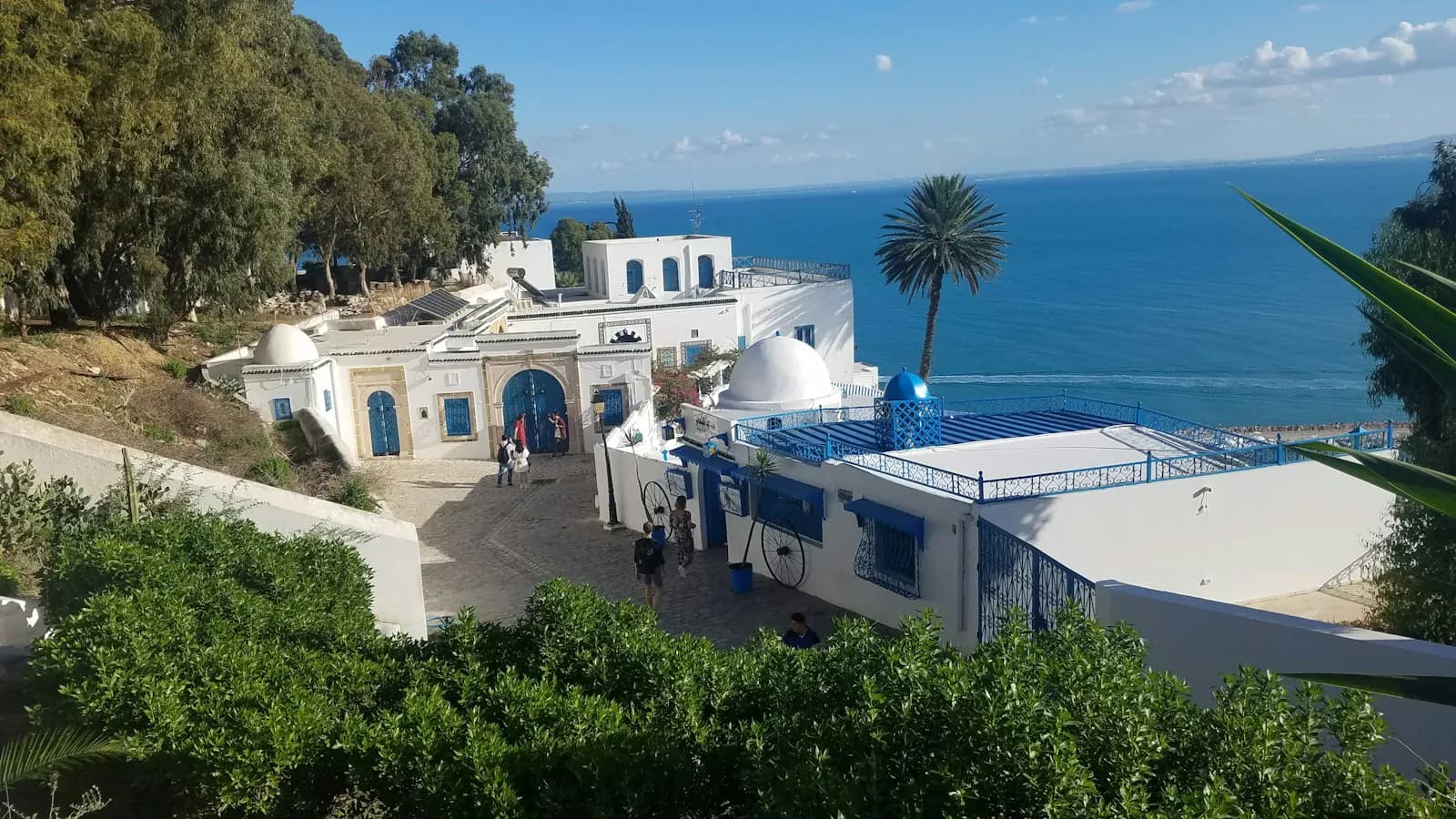
- Unofficial guides at Carthage, Sidi Bou Said and the medina gates who start talking and then ask for money. Agree a price first or say no clearly.
- Reception and beach upsells. Excursions sold at the hotel desk or by beach reps often add a commission on top of the operator’s price. Compare before you pay.
- Bags and phones on café tables, on the TGM train and in crowded souks.
A guided day removes most of this friction. On our Tunis Carthage Sidi Bou Said excursion, a licensed driver picks you up at the hotel and you pay €80 for the whole car from Hammamet for up to four people, about €20 each, with no reception markup. A solo traveller may find a hotel coach tour cheaper; from two or three people, the private car usually wins.
 Tunis, Carthage & Sidi Bou SaidFull day, from €70 per carSee this day
Is Tunisia safe for women and solo female travellers?
Generally yes in resorts and city centres, but expect unwanted attention. The FCDO says reports of sexual harassment rise in summer, both at night in busy places and in quiet parks and beaches by day. France warns that women travelling alone may face attention that can turn into harassment.
- Dress a little more covered in towns and rural areas than on the hotel beach: Germany and Italy both advise it outside tourist zones.
- Do not engage with persistent comments. A firm "la, shukran" (no, thank you) and walking on works better than arguing.
- Use hotel-booked transport at night, and avoid isolated beaches after dark.
- Sit in the back of taxis and share your live location with someone.
Many solo women prefer a private driver for long days inland, simply because it removes the louage stations and the waiting around.
Is Tunisia safe for LGBT travellers?
Same-sex relations are illegal in Tunisia. Article 230 of the penal code provides for up to three years in prison, according to France Diplomatie, and the FCDO says LGBT+ people have been targeted by criminals. Germany advises avoiding public displays of affection. Be discreet in public, and wary of strangers met online who suggest meeting somewhere private.
Is it safe to drive in Tunisia?
You can, but it is the riskiest thing most visitors do. Germany describes a higher accident risk and says you cannot rely on others following the rules; France points to dangerous driving around pedestrians and scooters. Both advise against driving at night outside towns.
- Traffic drives on the right. UK drivers need a 1968 International Driving Permit with their licence, says the FCDO.
- The alcohol limit is lower than at home: Germany gives 0.3 per mille, Italy says zero. Simply do not drink and drive.
- Motorway tolls are paid in cash. Police checkpoints are common: slow down, keep your papers handy.
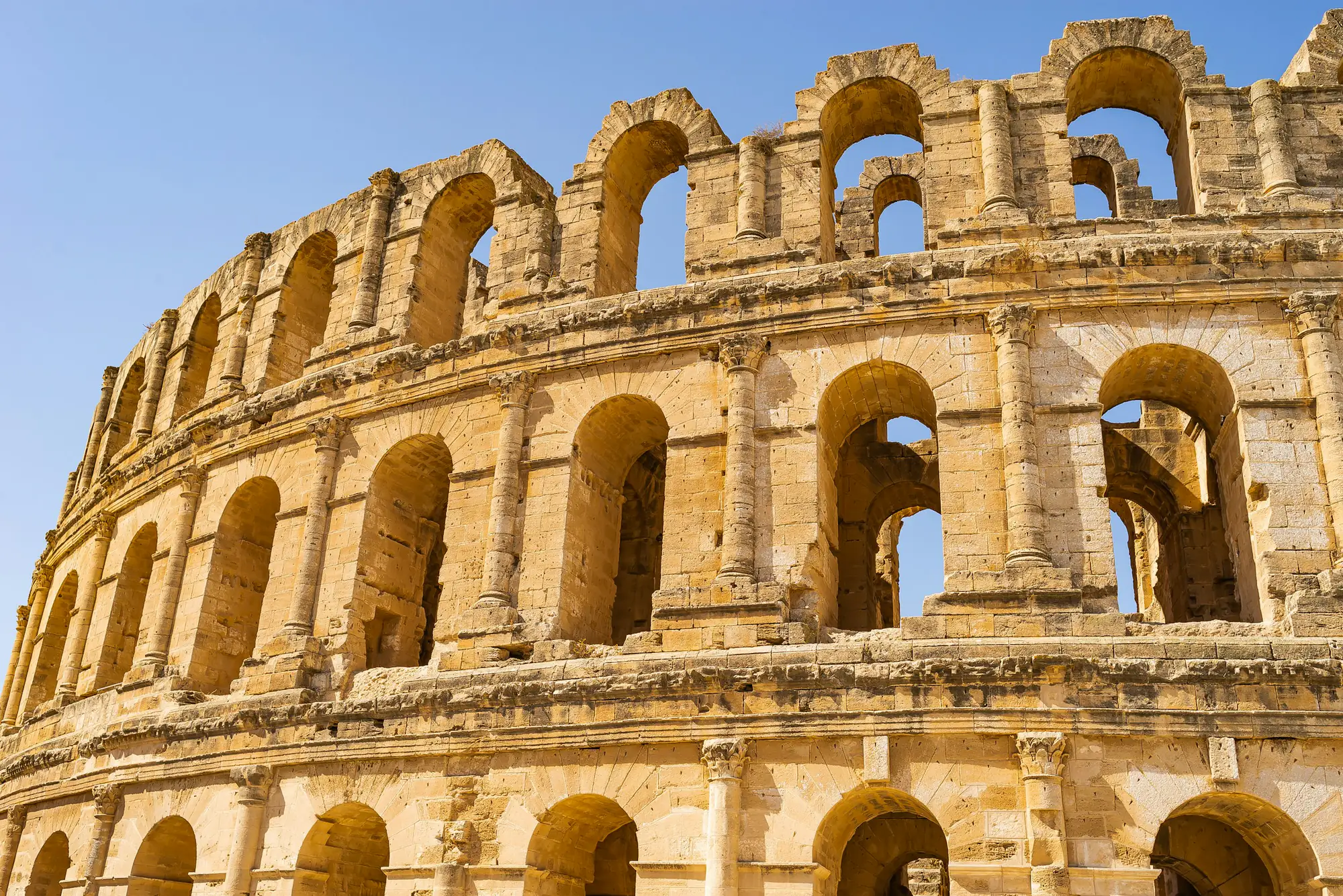
For the long runs inland, to El Jem’s amphitheatre and Kairouan for example, a driver who does the road every week is the calmer option. Our El Jem Kairouan excursion costs €100 per car from Sousse.
 El Jem & KairouanFull day, from €90 per carSee this day
Can you drink the tap water, and how hot does it get?
Most visitors stick to bottled water, which is cheap everywhere, and Italy advises avoiding ice where possible. The bigger health risk for a beach holiday is the sun.
- Heat. In Hammamet the hot season runs from about 22 June to 14 September, with August highs averaging 32°C (Weather Spark). Inland sites such as El Jem and Kairouan feel hotter, with little shade.
- Rabies. Italy reports rising cases: do not touch stray dogs or cats, and see a doctor fast after any bite or scratch.
- Cosmetic surgery. France has recorded several post-operative complications in medical tourists.
A couple in Hammamet in August should plan sightseeing for the morning and head back by mid-afternoon. Our guide to the best time to visit Tunisia covers the cooler months.
How many British tourists visit Tunisia?
More every year. Between 1 January and 20 November 2025, Tunisia counted 415,000 British visitors, up 40% on 2024, according to Ministry of Tourism figures reported by Agence Ecofin. France sent 1.07 million in the same period, and the country passed 11 million visitors in total by 22 December 2025.
Package operators such as TUI sell Hammamet, Sousse and Port El Kantaoui to British families again. Ten years after the Sousse attack, those numbers are the clearest sign of how far confidence has returned.
How to stay safe in Tunisia: a practical checklist
Once you have decided that Tunisia is safe to visit for your trip, a few minutes of preparation covers most of what can go wrong.
- Sign up for FCDO email alerts for Tunisia (the UK has no registration scheme). French travellers use Ariane, Germans Elefand, Italians Dove siamo nel mondo.
- Buy travel insurance that covers medical repatriation. Your GHIC or EHIC does not work in Tunisia, which is not in the EU.
- Save the emergency numbers: police 197, ambulance (SAMU) 190, civil protection and fire 198.
- Keep a photo of your passport, and leave the original in the hotel safe.
- Stay away from demonstrations, especially near embassies and on weekends.
- Book excursions with a named, licensed operator who gives you a written confirmation and a fixed price.
That last point is where our Tunisia excursions fit in. We work with licensed local agencies, confirm in writing within two hours, and you pay the driver at the end of the day. Our page on how we work with local agencies has the details, and our article on excursion prices in Tunisia compares hotel, beach and private options honestly. For a gentle first day out from Sousse or Hammamet, our Sousse Monastir excursion is an easy start.
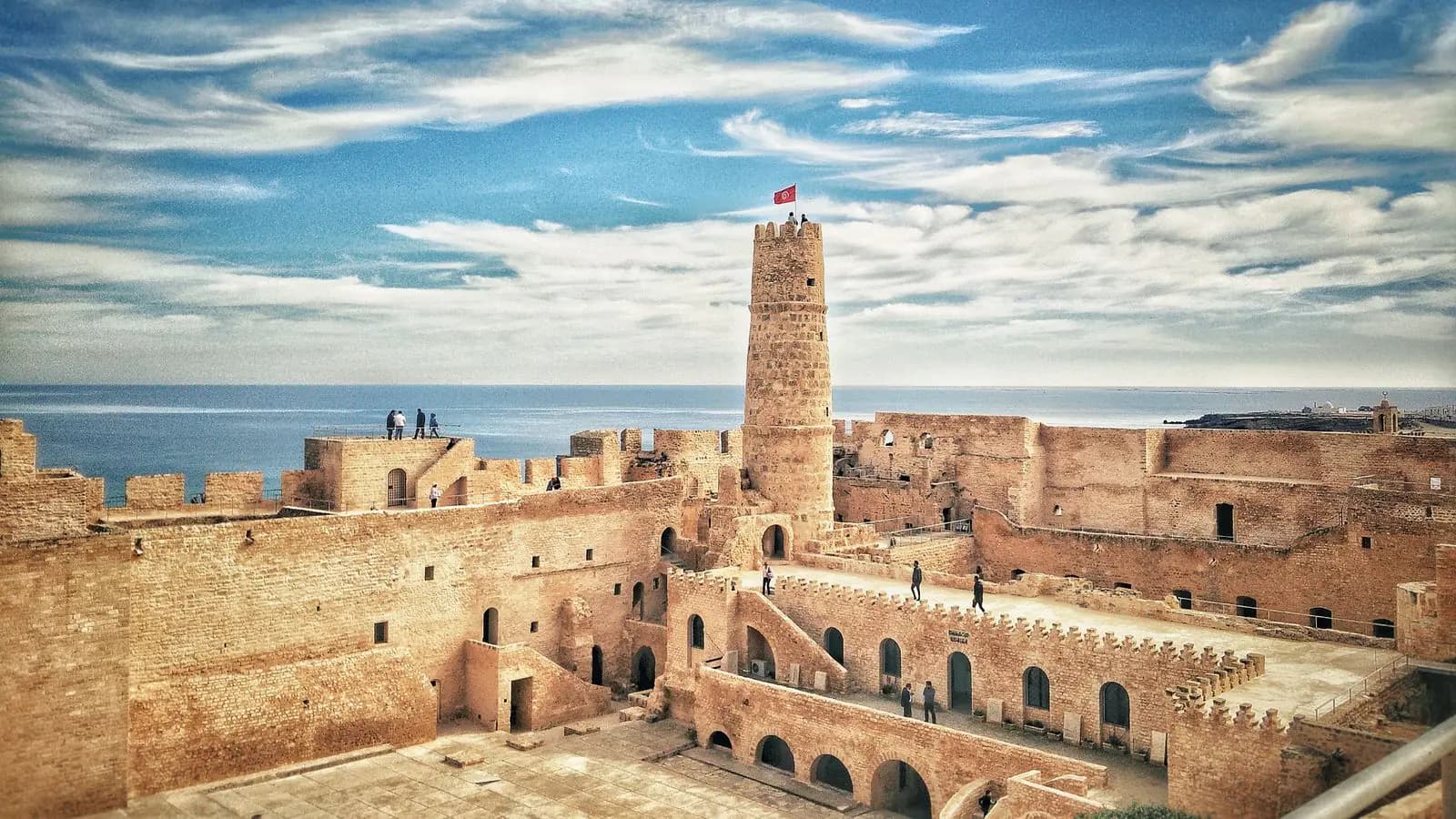 Sousse, Monastir & Port El KantaouiFull day, from €90 per carSee this day
Questions people ask
Is Tunisia safe to visit right now?
Yes, for the usual holiday areas. As of 9 October 2026, the UK, US, French, German and Italian governments allow travel to Tunis, Hammamet, Sousse, Monastir and Djerba. They advise against the Algerian and Libyan border areas, some western mountains and the far southern military zone, and they all mention a continuing terrorism risk.
Is Hammamet safe for tourists?
Yes. Hammamet is outside every restricted zone on the British, American, French, German and Italian lists, and it is one of the country’s busiest resorts. Watch for pickpockets in the medina, agree taxi fares when the meter is off, and compare excursion prices before buying at the hotel desk.
Is Djerba safe?
Yes, Djerba is open on all five government advisories. The UK’s 75 km Libyan border band explicitly excludes Zarzis and northern Medenine governorate, which includes the island. A shooting at the Ghriba synagogue in May 2023 killed five people, so expect visible security around religious sites.
Is Tunisia safe for female tourists?
Most women travel without serious problems, but harassment is common, and the FCDO says reports rise in summer. Dress more modestly away from the beach, ignore persistent comments, use booked transport at night and avoid isolated beaches after dark. Many solo women choose a private driver for long trips inland.
Do I need travel insurance for Tunisia?
Yes, and it should include medical repatriation. Tunisia is not in the EU, so a GHIC or EHIC card is useless there, and private clinics expect payment. Italy’s Farnesina explicitly recommends cover for medical costs and repatriation. Check that the policy does not exclude areas your trip includes.
Sources
- GOV.UK (FCDO): Tunisia travel advice
- GOV.UK (FCDO): Tunisia, warnings and insurance
- GOV.UK (FCDO): Tunisia, safety and security
- U.S. Department of State: Tunisia Travel Advisory
- France Diplomatie: Tunisie, conseils aux voyageurs, sécurité
- Auswärtiges Amt: Tunesien, Reise- und Sicherheitshinweise
- Viaggiare Sicuri (Farnesina): Tunisia, scheda paese
- Ministère du Tourisme (Tunisie): La Tunisie franchit le cap de 11 millions de touristes en 2025
- Agence Ecofin: La Tunisie franchit les 10 millions de touristes en 2025
- Kapitalis: reprise des marchés français et allemand (chiffres 2023)
- Arab News: UK lifts advisory against travel to most of Tunisia (26 July 2017)
- Wikipedia: 2015 Sousse attacks
- Wikipedia: Bardo National Museum attack
- Wikipedia: 2026 Iran war ceasefire
- Wikipedia: 2026 in Tunisia
- Weather Spark: Climate and average weather in Hammamet